


Compare home EV chargers from Alfen, Wallbox, Zaptec en ABL. Single and three-phase, suitable for charging on surplus solar power. Choosing between Zaptec Go, Alfen Eve or Wallbox Pulsar? We compare them side by side.
Showing all 8 results

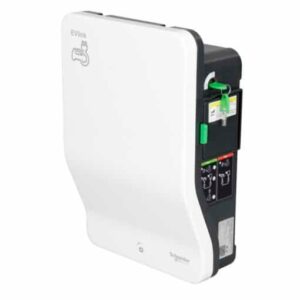
Which EV charger suits your situation?
The four best-selling home EV chargers compared on the criteria that matter: phase connection, smart features, reliability and price.
| Model | Power | Solar charging | Dynamic load balancing | Price range |
|---|---|---|---|---|
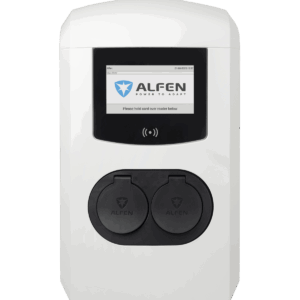
| Alfen Eve Single S-line | 3.7–22 kW (single/three-phase) | Yes, via app | Yes, built in | €795–€1.150 |
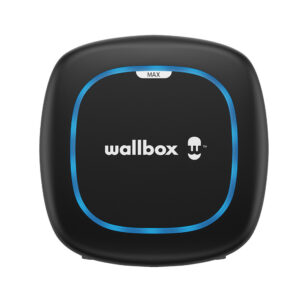
| Wallbox Pulsar Plus | 7,4 of 22 kW | Yes, with Eco mode | Yes, via Power Boost | €695–€895 |
EV charger brands
The four market leaders in home chargers — MID-certified versions available (see product page) and solar charging compatible.
Frequently asked questions
Single-phase or three-phase EV charger — which do I need?
Single-phase delivers max. 7.4 kW (~40 km of range per hour of charging). Three-phase delivers max. 22 kW (~110 km per hour). Most Dutch homes have a single-phase connection; your electrician has to request three-phase from the grid operator (€350–€650). For daily use, single-phase 7.4 kW is perfectly adequate — the car charges fully overnight.
What is solar charging / surplus charging?
Solar charging laat de laadpaal alleen laden met de stroom die je zonnepanelen op dat moment overproduceren. Met het einde van de salderingsregeling per 2027 wordt dit cruciaal: stroom die je niet zelf gebruikt levert €0.07/kWh op, maar terugkopen kost €0.32/kWh. Solar-laden = €0.25/kWh besparing per kWh die anders gesalderd zou worden.
How does dynamic load balancing work?
Load balancing measures how much power your home is using at that moment (oven, dishwasher) and automatically adjusts the charging power so your main fuse (35A or 25A) is not overloaded. Without load balancing, an 11 kW EV charger can blow your main fuse when the oven is on.
Which cable do I need: tethered or socket?
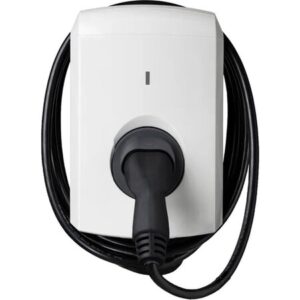
Tethered (Mode 3 with cable attached to the charger) is common — no cable blowing around, no loose plug. Type 2 socket (plug-to-plug) is handy with several vehicles or visitors. The Alfen Eve is also available as a socket version.
Does my EV charger work with a dynamic energy contract?
Yes — all 4 brands above support smart charging at hourly prices. Via the app (Alfen Eve App, Wallbox app) or an open protocol (Modbus) you set the EV charger to charge when power is cheap (at night). Saves €15–€35/month for an average user.
How much does EV charger installation cost?
Standard installation costs €395–€650 including NEN 1010 test report, materials (circuit, 30 mA Type B RCD, 5×2.5 mm² or 6 mm² cable) and max. 15 m cable route. Requesting three-phase from the grid operator: €350–€650 extra. Installation is carried out by our own engineers within our service area (South Holland and surroundings).
Choosing an EV charger in 2026
With the Dutch net metering phase-out approaching in 2027, solar charging becomes the most important feature: storing your solar surplus in your car battery for evening use saves €380–€750 a year. Our 4 models all support this natively via app or energy meter connection.
Our 3 most popular EV chargers
- Alfen Eve Single S-line three-phase 22 kW — Dutch quality, MID-certified
- Wallbox Pulsar Plus 7.4 kW — best value single-phase
Combine with
For optimal solar charging: combine with a smart energy meter such as the HomeWizard P1 which feeds your EV charger with live surplus data from your main connection.
Delivery time per item on the product page, delivery to EU countries, installation by NEN 3140-certified engineers.